
Climate Diaries: Uganda
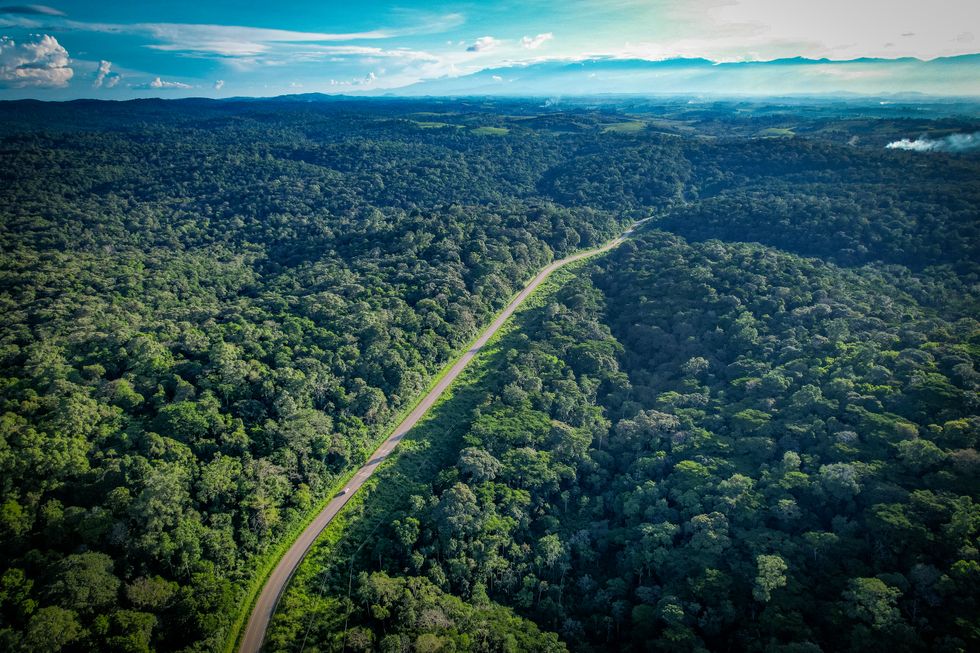
Kibale National Park
One of the most biodiverse national parks in the world, it’s home to over 300 bird species and a diverse range of primates.
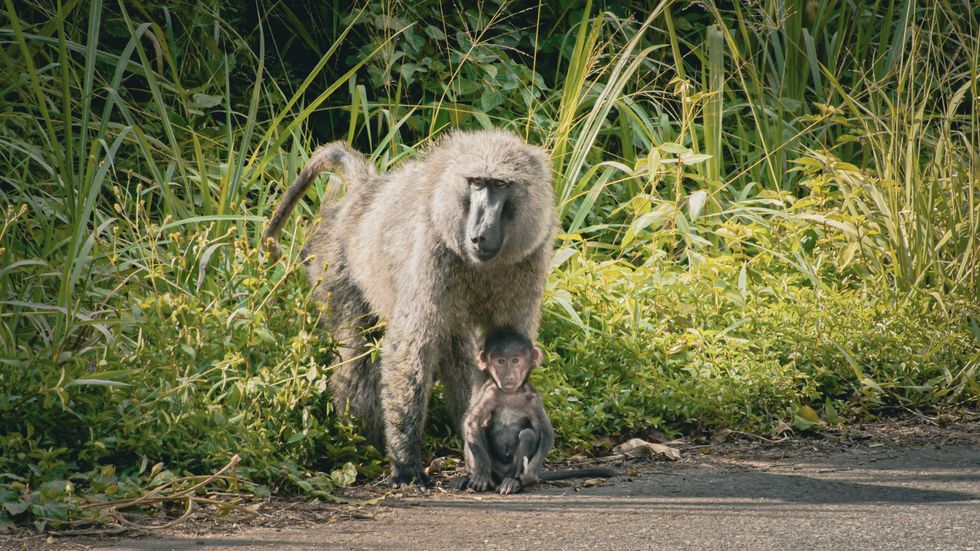
Need for conservation
Some of these species are endangered - like chimpanzees, red colobus monkeys and pangolins.

Establishing field plots
BeZero visited Kibale National Park to measure carbon and biodiversity, in collaboration with Uganda Wildlife Authority and local universities.
Plotting our futures: Vincent & Innocent
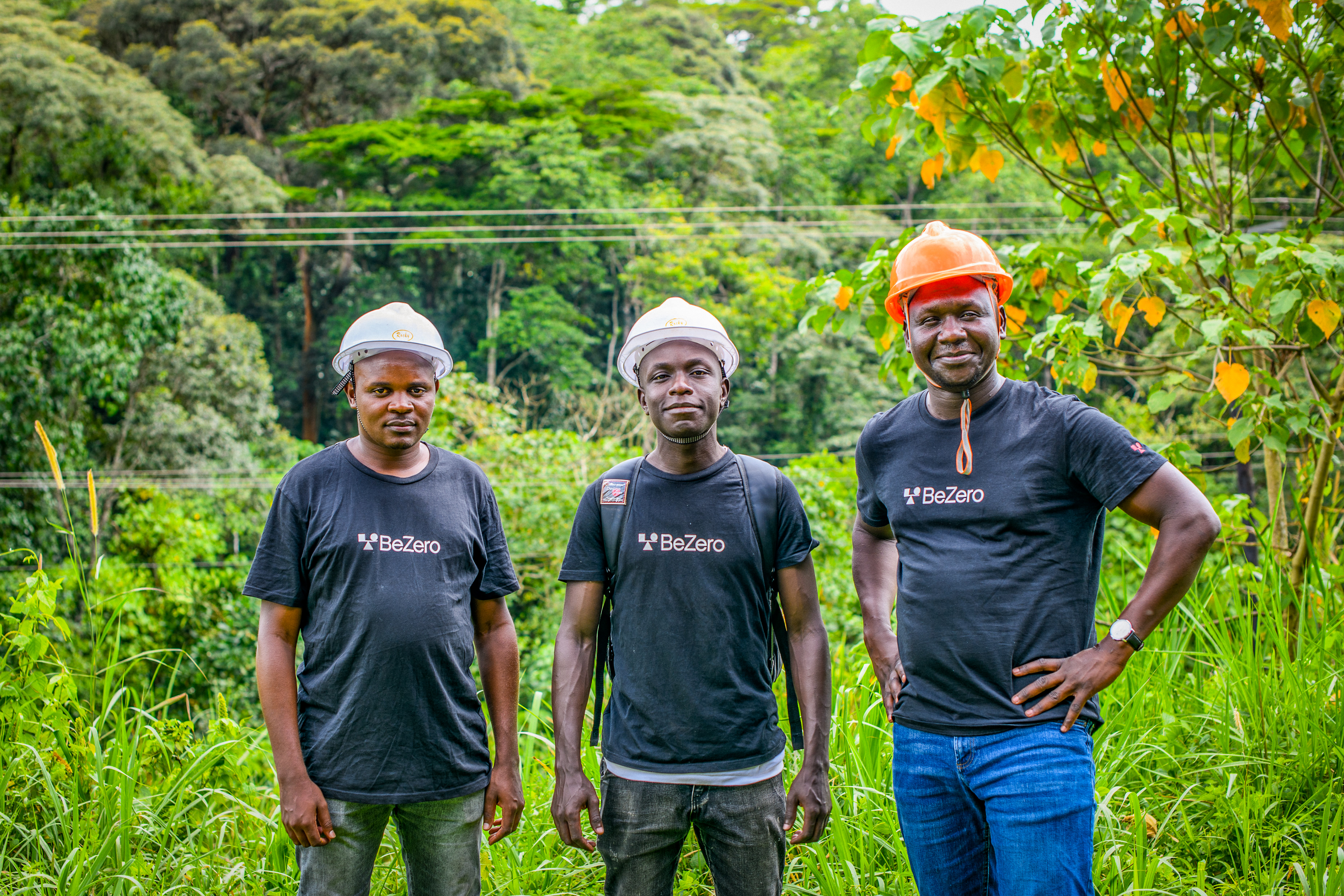
Innocent Kasekendi (left) & Vincent Munguleni (middle) were both studying natural sciences in Ugandan universities, when they were approached by BeZero to take part in scientific research. What they helped to build continues to monitor carbon stocks in one of the most biodiverse forests in the world. What they learnt has helped set them up for careers in climate action.
VM: My background in biology made me passionate about life—plants, animals, and the interconnectedness of ecosystems. But as I studied more, I saw how environmental degradation and climate change threaten that life. That realisation motivated me to focus on protecting biodiversity and addressing climate change. That’s what drew me to carbon markets and climate finance, and it continues to drive me today.
After my first year of my Master’s program, my lecturer shared an advert from BeZero, looking for Ugandan students to participate in a field project focused on carbon and biodiversity in Kibale National Forest.
The task - establish 20 permanent field plots within the forest. By establishing these plots and measuring the trees within them, we can gain an understanding of how much carbon each plot may contain. The permanent nature of these plots - demarcated with metal poles - means that we can revisit the exact spots in years to come and assess whether the forest plots contain more or less carbon.
Kibale National Park
Kibale is one of Uganda’s key national parks. It’s one of the most biodiverse parks in the world, home to over 300 bird species and 13 primate species. Some of these species are endangered—like chimpanzees and red colobus monkeys. It also has pangolins and many other species at risk of extinction. Protecting this habitat is crucial for their survival. We frequently saw mangabeys, red-tailed monkeys, and even encountered chimpanzees once. It’s a truly special place.
VM: We randomly generated twenty 50m x 50m plots throughout Kibale Forest—some in very remote areas. Some plots were accessible by car, but others required walking for over an hour through the dense forest. Kibale is a natural forest; the first thing that the rangers warn you about are the elephants, which roam the forest—you must always be alert.
IK: Each day, we prepared our equipment—tree tags, measuring tapes, tools for height measurement, and notebooks for data collection. Using GPS, we’d navigate to the designated location and mark the center of the plot. It was physically demanding work—we usually managed two plots a day, each taking three to four hours to complete.


Uganda Wildlife conservation
VM: I learned how valuable forests are for carbon sequestration and biodiversity. We observed clear differences between degraded and intact areas—mature forests held many more trees and higher carbon stock. It reinforced my belief in the need to protect and restore natural forests. Kibale forest supports local communities, with many local people depending on it for their livelihoods—through tourism, tea farming, and small enterprises like the Bigodi Wetland women’s craft group. Protecting it is essential both for nature and the people around it.
IK: Understanding the carbon stored in places like Kibale helps us realise how important such ecosystems are. Nature-based carbon credits play a crucial role in protecting these areas—by valuing the carbon stored in trees and biodiversity, we can reduce emissions and support conservation efforts.
My undergraduate studies were government-funded, but I had to finance my Master’s myself, which was difficult. I was worried I might not be able to finish. When I learned I’d been shortlisted for the BeZero opportunity, I was overjoyed—it meant I could complete my degree and advance my academic journey.
As an environmentalist, I’m committed to conservation. Climate change affects our communities directly, so I try to raise awareness—encouraging people to plant trees, avoid deforestation, and understand how these actions help with carbon sequestration and erosion prevention. I want future generations to enjoy the same benefits from nature that we do now.
VM: BeZero also covered my tuition and research costs, which was a huge relief—many students here struggle to fund their research and often take five to seven years to complete their Master’s. Thanks to their support, I graduated on time in 2024—actually the only one in my cohort to do so. Without that support from BeZero, I wouldn’t be where I am today. That opportunity allowed me to start my professional career, and build a future in carbon markets and climate finance.


eDNA
VM: We also conducted eDNA sampling to assess biodiversity in the forest. For the eDNA work, we collected samples from rivers, streams, and wetlands, filtered them, and sent them to Switzerland for DNA analysis.
Environmental DNA (eDNA) is genetic material obtained directly from environmental samples (soil, sediment, water, etc.) that do not show any obvious signs of containing biological source material. In this video, we unpack eDNA biodiversity monitoring and how it could be useful in examining the biodiversity claims of carbon projects. The use of eDNA as a tool for capturing ecosystem characteristics could also be an important step in the development of nature-based credits.
The potential of East Africa and the role of ratings
VM: East African countries emit very little but are among the most affected by climate change. For example, in Kibale, most people depend on farming. As the climate changes, yields suffer—but if we have strong, transparent carbon projects, they can provide jobs and income while also helping the planet. That’s why I’m passionate about this work.
Integrity and transparency are key. Not all carbon credits are equal, so ratings are essential to assess their quality. Carbon ratings play a crucial role in building trust and ensuring the market delivers real climate action. When everything is visible to buyers and stakeholders, projects are motivated to operate with integrity. This transparency builds confidence and drives more participation in carbon markets—ultimately accelerating global climate action.
East Africa is in a great position for carbon projects. We’re seeing more projects emerging in Kenya, Uganda, and across the region. With the finalisation of Article 6 rules, things are picking up. Governments are also improving their regulatory frameworks—Uganda, for instance, published new carbon market regulations in May this year, along with monitoring and reporting systems to ensure that projects benefit local communities.
East Africa has the right conditions for investment in carbon projects. What’s needed now is continued capacity building and alignment among governments to implement Article 6 effectively, alongside voluntary market mechanisms.
Carbon markets, especially under Article 6, can provide the finance needed for both mitigation and adaptation—restoring forests, supporting communities, and improving livelihoods.
View all of our rated projects in Eastern Africa
View