
Climate Diaries: American forests
New England
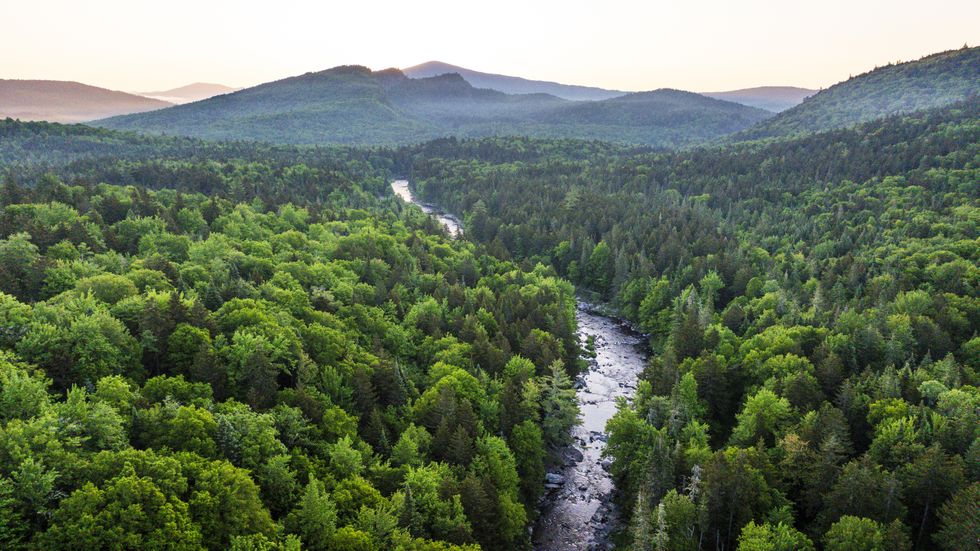
A six state region in the Northeastern United States. Over 80% of New England is forested, across 5 million acres.
Favoured by big tech
The world’s largest companies invest heavily in forest carbon projects, and partner with BeZero for due diligence.
BeZero's expertise
Our scientists have assessed 250+ forestry projects, powered by proprietary models and geospatial data.
BeZero has assessed 100+ Improved Forest Management (IFM) projects globally, combining forestry science, market expertise, and on-the-ground experience. Our ratings are powered by geospatial partnerships with space agencies and commercial providers, proprietary dynamic baselines, a global plots database spanning 200,000+ sites, and in-house climate and topographical analysis. This comprehensive approach to project assessments enables analyst-led ratings that bring clarity to complex forest management projects.
Seeing the wood for the trees
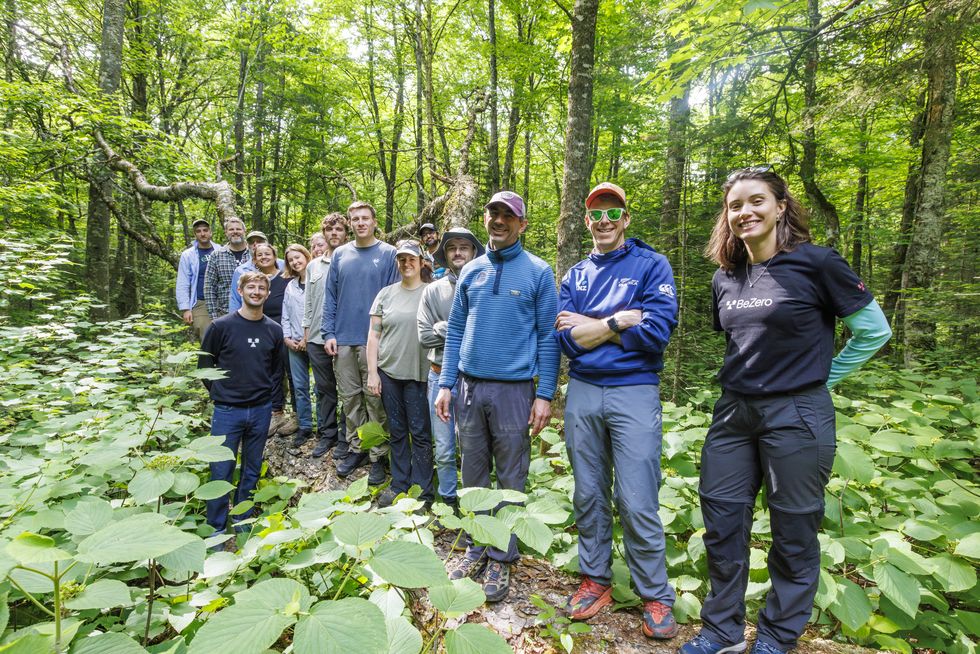
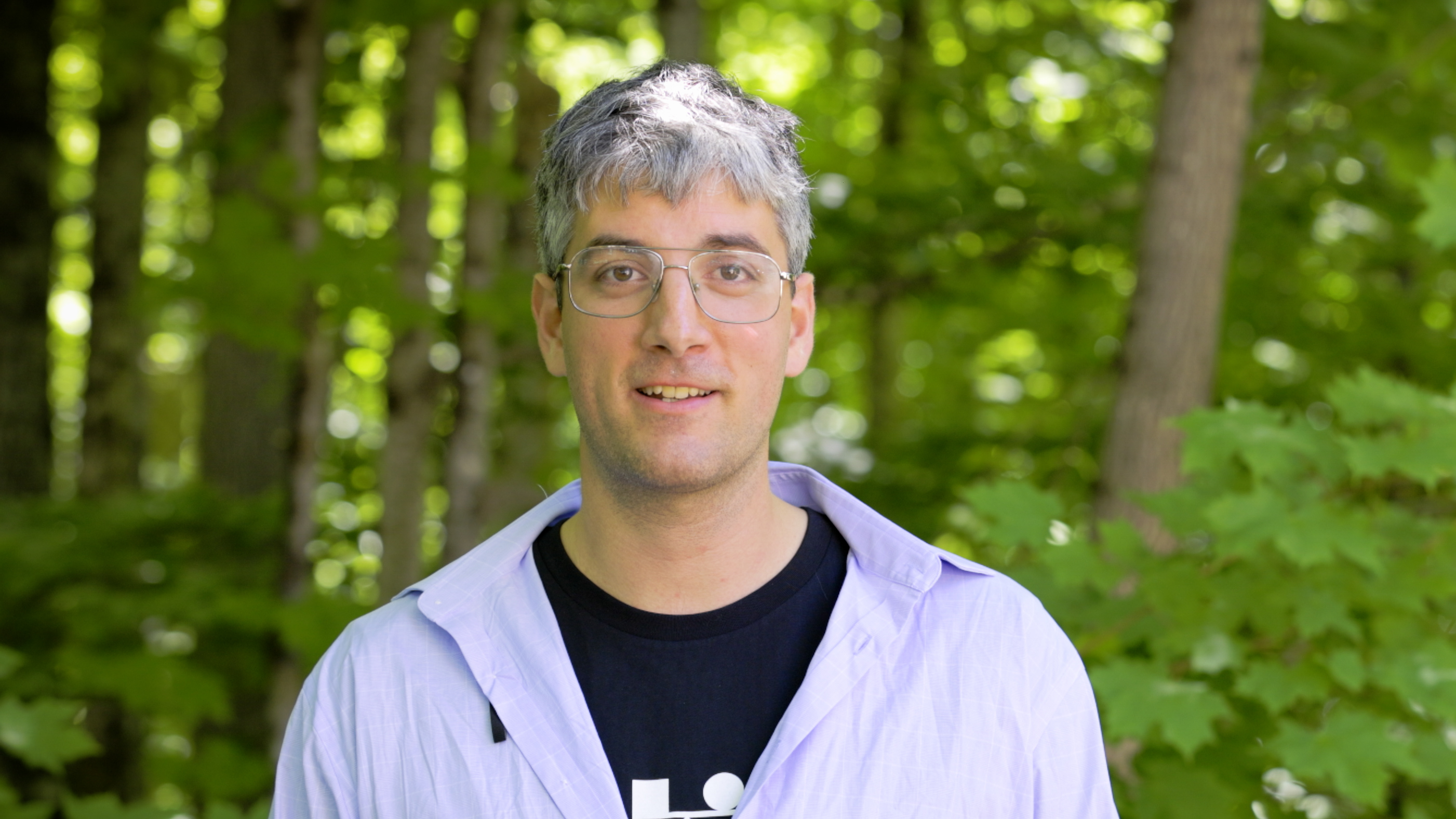
In June 2024, BeZero's forestry team took part in a series of site visits in the Northeastern United States where they met landowners to deepen their knowledge of forest measurement and management practices. Dr Jacob Socolar, Director of Nature Based Solutions at BeZero, reflects on his time exploring the forests of New England.
Let’s walk along the edge of a harvested stand of the forest. The cut was in spruce and fir, so the air smells unmistakably like Christmas. That sharp, resinous scent you only get from fresh needles and sap.
Almost immediately, the hike turns into a controlled tumble down a very steep hill. It’s the sort of slope that heavy forestry machines - PONSSE harvesters with tank-like treads - can crawl up and down with ease.
The ground is carpeted with spruce boughs, which protect the soil below from being damaged by the harvesters’ treads. It also makes walking easier, with a bed of pine needles underfoot. The smell intensifies. You tighten the elastic on your head net to protect from the swarm of bugs following you like a shadow.
“Let’s walk along the edge of a harvested stand of the forest. The cut was in spruce and fir, so the air smells unmistakably like Christmas. That sharp, resinous scent you only get from fresh needles and sap.”
It’s loud. You hear the high whine of the saw layered over the deep rumble of diesel engines. We’re walking through the spruce forest when you notice it: the top of a tree, shuddering slightly. Then, suddenly, the whole thing lifts a few metres into the air, tips sideways, and disappears from view. A second later, there’s the crack of snapping wood and a heavy thump as it hits the ground.
As we move farther downslope, the operators shut the machines off. Everything goes quiet. Even the birdsong has disappeared, driven away by all the activity. Then slowly, a yellow-rumped warbler sings. A jay lets out a sharp screech.
You continue to walk down this hill, clambering over stumps and branches. It’s a heavily modified landscape. This is the forest as it’s just been chewed through by a machine. This is the life of a managed forest.


In June of 2024, we brought almost the entire forestry team at BeZero Carbon to New England, USA. We were there to do two things: to better understand forest management in practice, especially in the US, and to spend time together in the kinds of landscapes we evaluate every day from afar.
The team rendezvoused at Spencer’s house (Chief Ratings Officer) in New Haven, Connecticut. It’s a really nice spot in typical southern New England deciduous woods, not far from Yale University. From there, we drove north to central Massachusetts and spent a day at Harvard Forest.
One of the very cool things we got to do there was climb one of the eddy covariance flux towers. These towers exist to make very careful measurements of carbon dioxide concentrations in the air, which can be used to understand exactly how much respiration and photosynthesis are occurring in the forest. The towers also provide breathtaking, panoramic views across the oak-dominated forest canopy.
I was once a professional ornithologist and am still a fairly serious amateur one. It was incredible to see tree swallows flying above the forest canopy, a species usually associated with open fields. You’d never see them in a forest from ground level.
We got to talk to some of the scientists there and learned about the state of the forest. One eye-opening point was just how variable forest growth is from year to year. In a really bad year, the forest might actually shrink; in a really good year, it can grow a lot. It really emphasised the complexity and importance of measuring forest growth accurately.
We headed further north into New Hampshire and spent time at Moosilauke Ravine Lodge, a Dartmouth College property nestled in the White Mountains.
“Spencer and I woke up around 3 am to climb a nearby mountain to watch dawn from the summit. As we hiked, we observed how forest composition changes with elevation. The view from the summit was unforgettable, with the sun rising across the treeline. So this is what a large, forested tract of mountainous New England looks like.”
One of the most valuable experiences for the team was visiting Dartmouth College’s Second College Grant. This is a large working forest, granted to Dartmouth by the state of New Hampshire. It functions both as a natural laboratory and as a long-term forestry investment, with timber harvests providing income. They employ a long-time forester, Kevin, who manages the property. Thanks to Spencer’s long-standing relationship with Dartmouth, we were able to spend a lot of time in the woods with Kevin, including observing active forestry operations.
We saw modern ‘cut-to-length’ harvesting systems in action. These machines grab a tree at the base, cut it, lift it, strip off the branches, and saw the log to specifications depending on what the mill accepts. Anything beyond that becomes logging ‘slash’ and stays in the forest. These machines are incredibly impressive. They’re wheeled, tracked, and capable of operating in rough terrain. We were even invited to climb into the cab of one of these machines, which is not something you normally get to do. Seeing these systems up close was both fun and extremely informative.


Improved forest management (IFM) takes an existing forest and manages it differently using carbon finance to increase the amount of carbon the forest stores over time. Most commonly, that means reducing harvests in the short term, though it can also involve other interventions, such as favouring higher-carbon species or enhancing growth rates.
When we rate IFM projects, a huge amount of effort goes into assessing whether the stated baseline - what would have happened without carbon finance - is realistic. Having direct experience with real forest management on the ground makes an enormous difference.
From a ratings perspective, understanding the capabilities and constraints of modern harvesting systems is crucial. Many IFM project baselines and scenarios depend on assumptions about what harvesting systems can realistically do - where they can operate, how steep the terrain can be, and how intensively forests can be managed. Seeing this firsthand provides a physically grounded intuition that’s hard to get from documents alone.
“Large multinationals understand our carbon expertise, but to be credible with consulting foresters and forestry teams, we need to speak their language. That’s important for rating carbon credits, but it’s even more important for establishing credibility with key stakeholders.”
IFM has been one of our busiest sectors, especially in the ex ante space where our job is to diligence projects. In the past year I’ve been on site visits to projects we’re rating in Maine, Michigan, and Louisiana. Much of the work we’ve been doing has been on behalf of household-name companies that are investing in carbon projects and trying to understand how to de-risk those investments.
Large multinationals understand our carbon expertise, but to be credible consulting with foresters and forestry teams, we need to speak their language. That means understanding the tools, machines, and harvest approaches: what a shelterwood cut is versus a clear-cut, what a regeneration cut is, what it means to mark trees to cut versus letting an operator select and so on. That’s important for rating carbon credits, but it’s even more important for establishing credibility with key stakeholders.
Learn more about BeZero's approach to rating IFM projects in this short overview video.
Overall, the trip provided a broad, grounded understanding of forest management, carbon measurement, and the realities of forestry operations, which I think made a meaningful difference for the team. The team was highly competent before, but now there’s a much broader base of people ready to lead this work, have conversations with clients and foresters, and rapidly assimilate project documentation. Being out in the woods together was invaluable. I learned a lot about every member of the team.
And there was plenty of time for social activities. These were less about work and more about getting to know each other as human beings. We did everything from sampling New Haven–style pizza to hiking, to sea kayaking out of Portland, Maine, and an infamous lobster dinner. I had the good sense not to order lobster - I stick with clams or oysters - but a few brave souls went for the full lobster experience.
Moments like that don’t show up in project documentation, but they matter. They’re part of what turns a group of specialists into a team.


Dr Aimee Achilleos, Senior Carbon Ratings Scientist and Blue Carbon Lead at BeZero, shares her experience of the trip, including the practical knowledge gained from meeting local foresters, how she enhanced her understanding of forestry related carbon risks, and the unique opportunity to spend quality time with her fellow carbon ratings analysts outside the office.
View all of our forestry projects in the Americas
View