
Climate Diaries: UK Direct Air Capture
Direct Air Capture
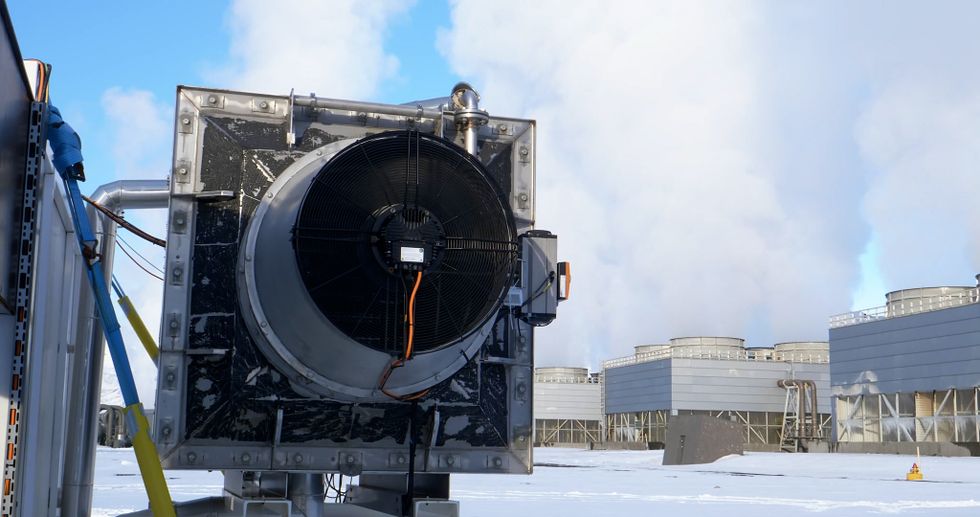
Although the method varies, the principle is simple - draw in ambient air, strip out the carbon dioxide and store it.

UK is leading the way
with favourable geology, world-leading financial services, supportive government policy and exceptional talent.
BeZero on a mission
We visited a UK-based Direct Air Capture developer, who are looking to innovate and scale rapidly.
Direct Air Capture in the UK
Dr Bojana Bajzelj, VP Carbon Removal, reflects on her visit to a Direct Air Capture facility in Norfolk, UK.
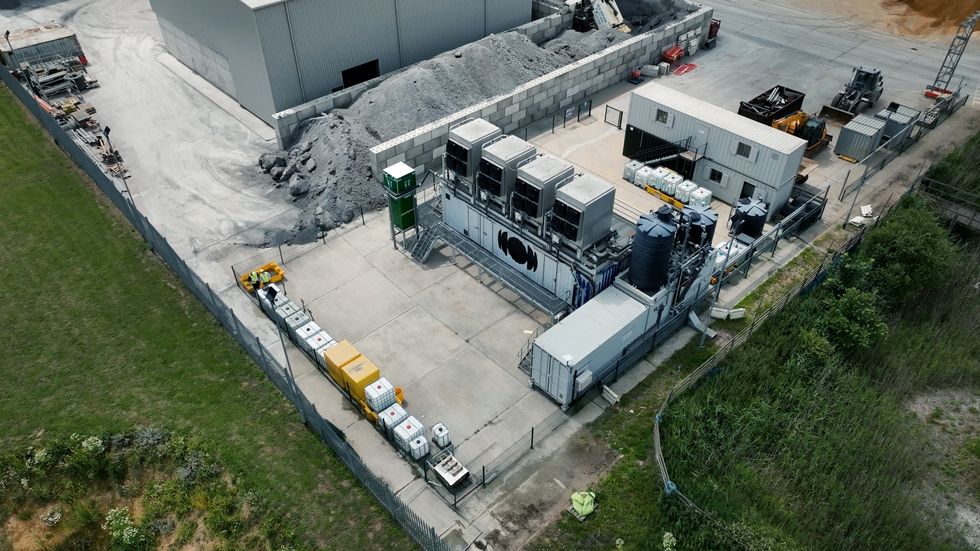
Before we enter the site, we’re given high vis, hard hats and steel toe-capped boots. Once we’re fully kitted up, we walk into the sights and sounds of heavy industry. Lorries carrying huge tankers roll across the tarmac in front of huge silos. I can hear the thrum of large machinery as we walk, passing a huge pile of grey ash before stopping in the corner of the yard. In front me is a shipping container, its corrugated white front bearing a logo. On top of it are huge whirring fans on top, covered in black netting.
This is a direct air capture facility. And its proximity to heavy industry is by design.
Why the UK makes sense for DAC
Geologically, the UK is well placed for CO₂ storage. The depleted oil and gas fields in the North Sea are under development to repurpose those sites for carbon storage. The same infrastructure which was once a cause of CO₂ being emitted is now a system for putting it back in the ground.
And that’s not just CO₂ from DAC. It could come from bioenergy with carbon capture and storage (BECCS), biogas, paper manufacturing, energy-from-waste facilities… There’s a portfolio of carbon removal solutions which could result in CO₂ being stored under the North Sea.
Another important factor is energy. Iceland, for example, has abundant geothermal energy. Other countries may have access to large amounts of hydropower or other low-carbon energy. Direct air capture needs significant amounts of electricity, heat, or both. The UK already has a relatively high share of renewables on the grid, which makes DAC viable.
DAC development is somewhat hampered by the UK energy prices, which are amongst the highest in Europe. For DAC to truly operationalise in the UK to hundreds of thousands of tonnes per year, we need greener, cheaper energy.
Despite high energy prices, the overall policy environment in the UK is very fertile. The UK government has invested heavily in Direct Air Capture, recently announcing a new DAC facility on Teesside, a joint venture set to capture around 60,000 tonnes of carbon per year. One developer taking part in this initiative is Mission Zero. I visited their Norfolk facility to learn more about their process.


I went to Norfolk to see a combined site operated by OCO Technology and Mission Zero. Mission Zero has a small pilot-scale direct air capture facility here, and the CO₂ it captures can be stored in the aggregates that OCO Technology processes on site.
The OCO operation is much larger because it also receives CO₂ from other sources, but together the two facilities give a useful demonstration of how direct air capture and permanent storage could work in practice to create carbon negative building materials.
I also had the pleasure of visiting their East London laboratories. Located under a railway arch in Bethnal Green, it’s just a stones throw from BeZero’s London HQ. Here, through scientific analysis, prototyping and innovation, Mission Zero are developing their next generation of DAC technology.
Scaling direct air capture
At Climate Week NYC, it was encouraging to hear an update from 1PointFive, which is in the final stages of constructing Stratos in Texas. Once completed, Stratos is set to be the largest direct air capture facility in the world. It aims to capture around 500,000 tonnes of CO₂ per year - approximately ten times the current global capacity.
Yet despite this exciting development, we are not scaling fast enough today. There isn’t a pipeline of similar industrial-scale operations, which is needed to achieve a billion tonnes of CO₂ annually by 2050.
However, there is a danger of creating a self-defeating prophecy where people say we should not invest in these technologies because they are not going to scale. If we invest in them seriously, they have a much better chance of scaling.


Why DAC still needs independent ratings
There can sometimes be an assumption that direct air capture credits are automatically high quality. I think that is a dangerous assumption.
Many direct air capture projects do perform very strongly from a carbon quality perspective, but that does not mean there are no risks. There are still important things to check. We look at whether embodied emissions have been accounted for properly. We look at energy accounting, because that is extremely important. We also look seriously at project execution risk.
And, as with any carbon project, developers have an incentive to issue as many credits as they can within the rules of the methodology. That does not mean something is wrong, but it does mean independent scrutiny remains important. Even sophisticated buyers already carrying out their own due diligence can benefit from ratings. Otherwise, every buyer, investor and intermediary ends up repeating a lot of the same work.
A reputable independent rating, carried out by scientists and analysts with experience across the market, can reduce that duplication while still allowing buyers to do whatever additional due diligence they feel is necessary.
Independence matters as well. An intermediary representing a project is not the same as an independent ratings agency. That is particularly important in direct air capture because the sector is still relatively new and there is already quite a lot of scepticism around it. A major quality problem could be very damaging to confidence in the sector as a whole.
Ratings can therefore be useful not only for buyers, but also for investors. They provide another indicator of the risks a project carries and of how the project may eventually be perceived by the wider market. That can be especially valuable in a space where the technology is still novel and many investors will not have the technical expertise to go deeply into every aspect of a project themselves.
Seeing projects on the ground matters
Seeing a project in real life gives you a better appreciation of the practical challenges. It’s also really valuable to speak directly with project developers. Theory is one thing. Making everything work in practice is another.
Even things like changes in ambient temperature can speed up or slow down the process. Insects can get into the air intake and equipment may need to be opened up and cleaned. These are the kinds of details you appreciate much more when you are standing on site.
Site visits do not make us softer on projects. Sometimes you can see that a huge amount of work has gone into something and still conclude that, while it may be a good project overall, the carbon claims are overstated. We take that responsibility seriously whether or not we have met the developer or visited the site.
But seeing projects on the ground makes the challenges more real, improves our understanding and can sometimes help us work faster, because you can gather a huge amount of information from one visit that might otherwise take much longer to piece together from different documents.

Expert analysts are at the heart of everything we do. Hear from a range of our experts as they explain our ratings process.
View all of our rated Direct Air Capture projects
View